Article: How Should a Dog Vest Fit? The Sizing Mistakes That Hunters Keep Making
How Should a Dog Vest Fit? The Sizing Mistakes That Hunters Keep Making

How should a dog vest fit? Most hunters never get a clear answer. The size chart says medium, the vest goes on the dog, it looks close enough, and that is the end of it until the first retrieve of the season, when it rides up the shoulders and stays there.
Usually it is not the vest. It is one of a handful of sizing errors that almost everyone makes at least once.
According to the Maryland Department of Natural Resources, a hunting dog can develop hypothermia in a light wind at 55-degree water and 40-degree air. That is a routine October morning on a duck marsh.
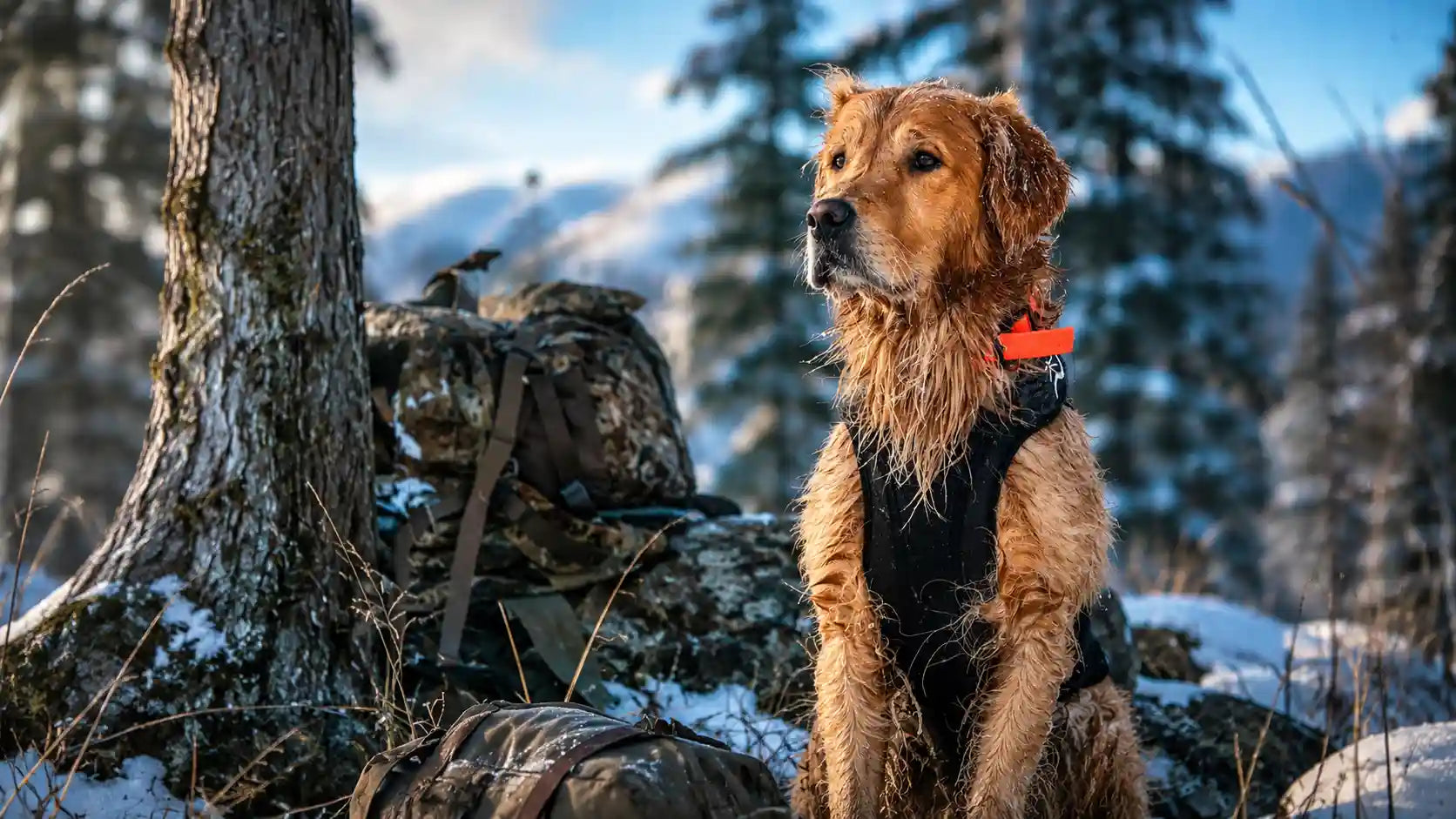
A properly fitted neoprene vest compresses against the dog's body like a wetsuit, blocking cold water and trapping heat. A loose one lets cold water pool against the skin. Fit is not a comfort question here. It is a safety question.
What Does a Properly Fitting Dog Vest Look Like?
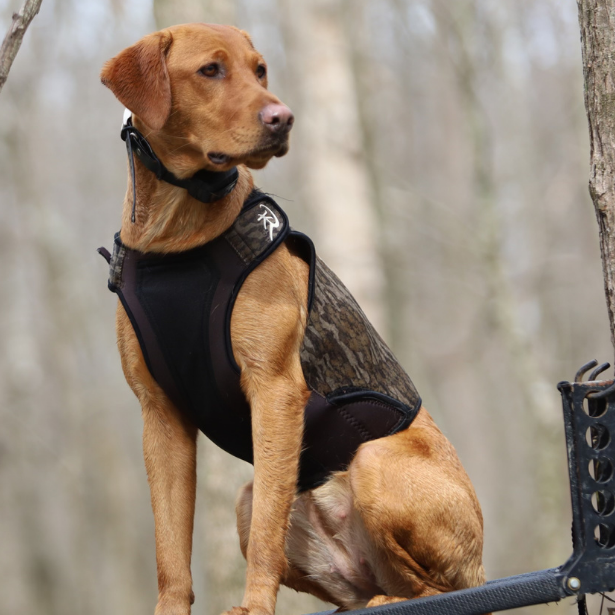
A well-fitting hunting dog vest makes solid contact at four points: chest girth, neck opening, body length, and shoulder mobility. Chest girth is the most important. It drives how the rest of the vest behaves.
Snug but not restrictive means the vest stays in contact with the dog's body without pinching. For a neoprene waterfowl vest, the fit is closer to a wetsuit than a jacket. There should be no gap between the neoprene and the dog's chest or sides, as that gap is where cold water enters and body heat escapes.
For an upland vest, the standard shifts toward mobility: the dog needs to extend fully through the front legs and push through brush without binding.
In motion, a properly fitting vest does not shift, rotate, or ride up. Run your dog, watch them shake and swim. A vest that stays in place through all of that is sized correctly.
See the Fit Guide for detailed breakdowns by breed and build.
The Sizing Mistakes Hunters Keep Making
Most fit problems trace back to the same small set of errors.
Sizing by weight rather than by measurements is the most common. Two Labs at the same weight can have very different chest girths. A hunting vest is sized to the chest, not to a scale.
Skipping the chest girth measurement comes in close behind. It is the most important number for a hunting vest, and the one hunters skip most often.
Measuring the wrong dog is a mistake hunters do not realize they made. A wet dog, a recently fed dog, or an excited dog has a different body shape than a dry, calm, standing one. Measure on a dry, calm, standing dog every time.
Sizing up for comfort is one of the costlier errors. A waterfowl vest that is even slightly large shifts on retrieves, gaps at the chest, and chafes the armpits across a full hunting day. The dog that emerged from a marsh with raw skin under both front legs wore a vest that was one size too big.
Ignoring neoprene compression catches first-time neoprene buyers. A 5mm vest feels firm straight out of the bag. That is normal. It compresses with body heat and movement. Do not size up because the vest feels stiff at home.
Assuming a medium is a medium across brands is an error with a predictable result. Sizing varies significantly between manufacturers. Always cross-reference the chart for the specific vest you are ordering.
Skipping the shoulder mobility check is the mistake that shows up mid-season. A vest that binds across the front shoulders slows retrieves and tires the dog faster. Watch your dog take several full strides before the first hunt.
How to Tell If Your Dog's Vest Does Not Fit
The vest rides up over the shoulders on retrieves or when the dog runs. There is a visible gap at the chest or along the belly. The vest rotates sideways during water entries. Hair is worn down, or skin is raw under the armpits or across the chest after a single day. The dog hesitates before entering water or moves stiffly through cover. A waterfowl vest soaks through, adding dead weight instead of insulating.
Each sign tells you something specific. Rotation during retrieves points to a chest girth that is too large. Armpit chafing points to a neck or chest opening that does not match the dog's build. A vest that soaks through is not making full contact with the body and cannot trap heat the way it is designed to.
Some of these signs are easy to miss in real time. A staged retrieve in the yard, recorded in slow motion, shows exactly how the vest behaves in motion: whether it stays in place through the retrieve, whether it rotates when the dog turns, and whether it rides up as the dog runs and jumps. Watching the footage back at normal speed rarely reveals what slow motion catches immediately.
Waterfowl vs. Upland Dog Vest Fit: Why the Standards Are Different
A waterfowl vest needs to compress against the body, seal out cold water, and allow full swimming movement. Any gap lets cold water reach the skin, and the insulating value drops.
An upland vest prioritizes range of motion. The dog is running sustained distances through heavy cover and needs full front leg extension without the vest binding or snagging.
A dog that hunts both disciplines may need two vests. A Lab that spends October in pheasant fields and November in flooded timber is doing two different jobs.
The Sure Fit Upland Vest and the 2.0 Sure Fit Waterfowl Vest are built around these different standards from the ground up.
How to Measure Your Dog for a Vest
You need a soft measuring tape, a calm dog standing on all four feet, and ideally a second set of hands.
Chest girth: Wrap the tape around the widest part of the rib cage, just behind the front legs. This is the number that determines your size, since it is the measurement that does not have built-in flexibility once the vest is on.
Body length: Measure from the base of the neck to the base of the tail. This helps confirm fit, particularly for dogs with proportions that fall outside a typical build.
Neck circumference is not something you need to measure for the Sure Fit line. The neck opening is built with enough adjustment range to fit comfortably across a variety of neck sizes within each chest girth size, so getting the chest measurement right is what matters most.
Measure on a dry, resting dog. Not after a run, not right after feeding. If your dog falls between sizes, the size charts will show you exactly where that falls for your dog's breed, and the Fit Guide walks through the same chest measurement step by step if you want a second confirmation. When two sizes are close, default to the one that matches chest girth over the others.
What Happens If the Vest Still Does Not Fit?
Even careful measurers occasionally need to exchange. Our Perfect Fit Policy covers every vest purchased directly through ReKoileOutdoors.com. Within 30 days of receiving your order, we will send a replacement in the correct size at no additional cost. If an exchange does not work, we offer a full refund on return.
For dogs whose proportions fall outside standard sizing, custom extension pieces are available for an additional fee. Return shipping within the U.S. is covered.
Quick Checklist for a Properly Fitting Dog Vest
-
Measure the chest girth on a dry, calm, standing dog, because those numbers change when the dog is wet, fed, or worked up, and will not reflect hunting conditions.
-
Cross-check your measurements against the size chart for the specific vest you are ordering, because sizing varies significantly between manufacturers, and a medium from one brand is not a medium from another.
-
Confirm the vest sits flat with no gaps at the chest, no rotation when the dog moves, and no riding up at the shoulders, because any of those conditions means cold water or chafing will follow.
-
Test full front shoulder extension before the first hunt by watching your dog run at natural stride, because shoulder restriction slows retrieves and tires the dog faster than most hunters expect.
-
For a waterfowl vest, verify the neoprene makes full contact and check swim mobility in water before opening day, because a gap between the vest and the skin allows cold water to pool and defeats the insulation.
-
For an upland vest, confirm the dog fully extends both front legs without binding at the shoulders, because restriction here shortens stride, adds fatigue, and reduces range over a long day in cover.
-
If the fit is off, exchange using the brand's policy rather than altering the vest, because modifying neoprene typically voids coverage and creates new edges that chafe more than the original problem did.
Where to Get a Dog Vest That Actually Fits
Most hunting dog vests are sized by weight range and a single chest measurement. The Sure Fit system is built around the contact points that actually determine whether a vest holds up in the field: chest girth, neck opening, and shoulder mobility, across six breed-specific sizes. A Boykin and a Lab wearing the same size are not getting the same configuration. They are getting a vest built for their proportions.
Both the 2.0 Sure Fit Waterfowl Vest and the Sure Fit Upland Vest are available in the full size range and backed by the Perfect Fit Policy. Learn more about how the system was designed at The System.
Why Hunters Trust ReKoile Outdoors Dog Vests
ReKoile Outdoors is built by waterfowl and upland hunters who ran into the same fit frustrations every serious gun dog hunter eventually faces. We design for both disciplines because the requirements are genuinely different, and a hunter who runs a Lab on ducks in November and pheasants in October deserves gear built for each. Our dogs give us everything without second-guessing. That kind of commitment deserves gear built the same way, with everything.
Our vests are rated 4.9 out of 5 by over 386 verified customers. Every order is backed by the Perfect Fit Policy because buying gear for a dog online is different from trying it on in person, and we would rather earn the exchange than lose a customer who got the wrong size the first time.
Stop Guessing, Start Fitting
A vest that fits right stays in place on retrieves, protects through a full day in cover, and comes off at the end of it without chafing to show for it. Stop guessing on size and stop returning vests that almost work.
Shop the 2.0 Sure Fit Waterfowl Vest, shop the Sure Fit Upland Vest, or read the Perfect Fit Policy before you order.