Article: Cold Water, Long Sits: How to Actually Keep a Retriever Warm in the Blind
Cold Water, Long Sits: How to Actually Keep a Retriever Warm in the Blind

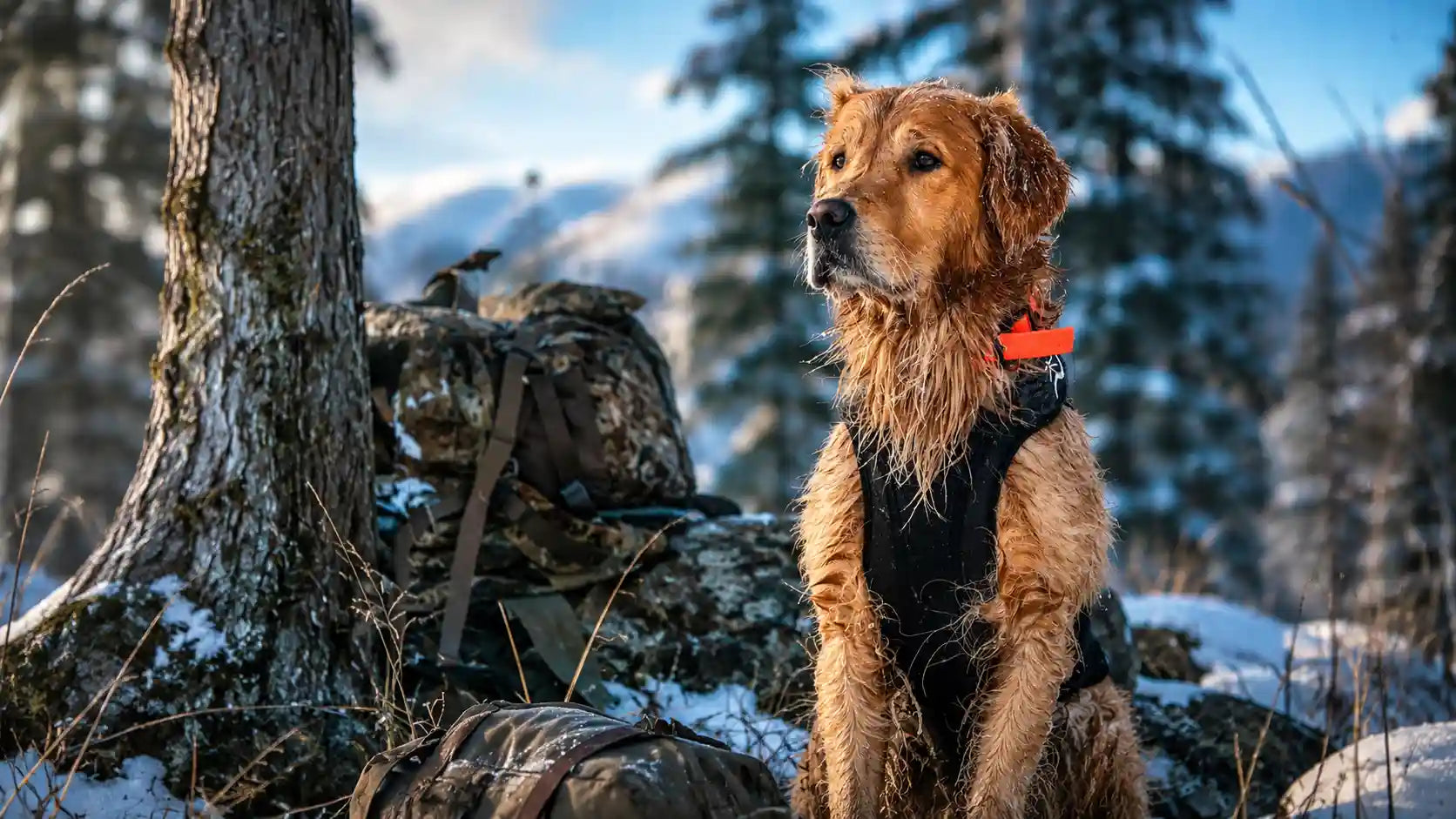
Your dog comes out of the water after a retrieve, shakes twice, and starts shivering. You towel her off, she settles, and twenty minutes later she is shivering again. Is that normal cold-morning behavior, or is your dog in trouble?
Most hunters do not learn how to keep a hunting dog warm in cold water until they have already had a scare. Canine hypothermia is preventable, but it rarely announces itself clearly. The dogs that handle late season best are not the ones with the thickest coats.
They are the ones whose warmth was managed hours before the truck door opened and hours after it closed. This is that full system, from the night before to the ride home.
Why Retrievers Lose Heat Faster Than Hunters Realize
Water pulls heat out of a dog's body far faster than air at the same temperature. That is the entire physics problem of cold-water hunting in one sentence. Wet fur loses almost all of its insulating value the moment it saturates, which is why a dog that was fine on the walk to the blind can be in real danger twenty minutes into a sit.
Wind chill compounds the loss between retrieves, when your dog is standing wet and exposed instead of moving and generating heat.
Smaller, leaner, short-coated retrievers cool faster than heavier, double-coated dogs, and age, body condition, and prior conditioning all change how much thermal reserve a dog has to draw on. Two dogs in the same blind on the same morning are not experiencing the same hunt.
The Warning Signs of a Dog That Is Getting Too Cold
Early signs are easy to miss because they look like normal cold-weather behavior: persistent shivering even after toweling off, reluctance to re-enter the water, slower retrieves, ears and paws that are cold to the touch.
Mid-stage signs are harder to explain away: a stiff gait, a hunched posture, glazed eyes, slower response to commands. According to the Maryland Department of Natural Resources, a dog in this range typically has a body temperature between 95 and 99 degrees Fahrenheit, down from a normal range of 101 to 102.5 degrees.
Critical signs mean the hunt is over immediately, no exceptions: shivering that stops rather than continues, pale gums, lethargy, staggering or loss of coordination. Shivering stopping is not your dog warming up. It means the body has exhausted its ability to generate heat on its own, and, according to the same source, body temperature at this stage can already be in the low 90s or lower.
How Cold Is Too Cold to Hunt?
There is no single safe temperature, because water temperature, air temperature, wind, retrieve frequency, and your dog's conditioning all interact. The Maryland DNR notes that hypothermia can develop in a dog even in light wind, 55-degree water, and 40-degree air, conditions plenty of hunters would call a mild October morning, not an emergency.
A fit, well-conditioned, well-fed lab tolerates conditions that a senior dog or an under-conditioned dog cannot. The honest question worth asking before every sit is simple: would you send your dog into this water if you were the one who had to go in after her?
Pre-Hunt Warmth Starts the Night Before
Cold-weather hunting significantly increases caloric demand, so feeding strategy should shift days before the hunt, not on the morning of. Dehydrated dogs lose heat faster, so water before and after the hunt matters as much as water during it. A tired dog enters the field with less thermal reserve to begin with, so rest matters too.
Pre-warm your dog in the truck cab rather than letting her warm up from cold once you arrive, and have dry bedding and crate insulation ready before and after the hunt. This is the step most guides skip entirely, and it is often the difference between a dog that handles a long cold sit and one that does not.
Choosing the Right Neoprene Vest for the Conditions You Actually Hunt
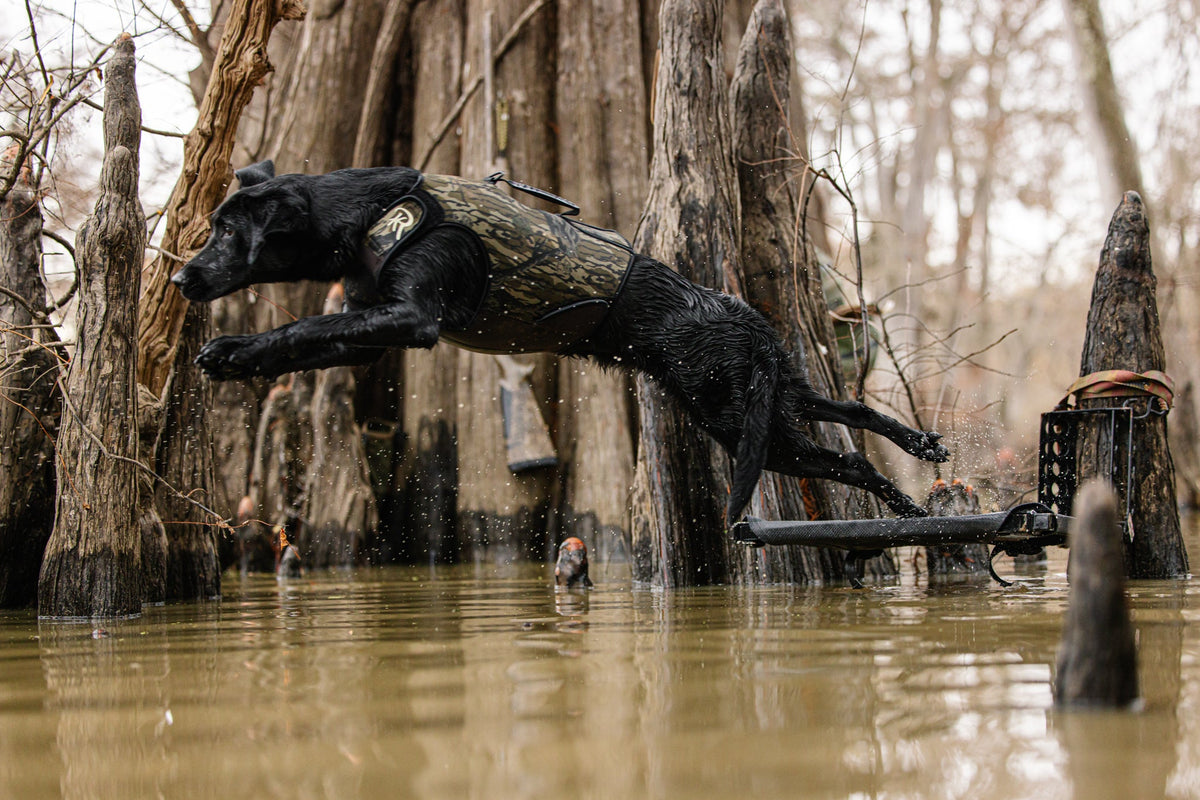
Neoprene works by trapping a thin layer of water against the skin that your dog's body heat warms, slowing further heat loss. Thickness matters, but more is not automatically better. A 5mm vest like the 2.0 Sure Fit Waterfowl Dog Vest is built for genuinely cold, wet conditions, but that same thickness can cause overheating during active retrieves on a milder day.
Fit matters more than thickness. A loose vest lets cold water flush continuously against the skin, which defeats the purpose of the neoprene entirely. Seam construction, chest coverage, and belly panel design all determine how much heat a vest actually retains in the field. Check your dog's measurements against the Dog Vest Fit Guide before the season starts, not after the first retrieve reveals a problem.
Managing the Wet Dog Between Retrieves
The hardest part of cold-water hunting is the wait, not the retrieve itself. A wet dog standing still in the wind loses heat faster than the same dog actively working. Rotate dry towels through the blind, use a neoprene chest warmer if conditions call for it, and position the blind out of the prevailing wind when you have a choice. A dog stand or platform that keeps her off cold, wet ground helps more than most hunters expect.
Letting your dog move briefly between retrieves can help her retain more warmth than keeping her still and shivering.
This is exactly the moment a well-fitting vest earns its keep: a vest holding water against the skin during a long, motionless wait does more damage than the same vest would during an active swim, since there is no movement to generate heat to offset it.
Breed, Age, and Every Dog in the Blind Is Different
Lean labs with low body fat cool faster than heavier-conditioned dogs. Chesapeakes naturally have oilier coats and real cold tolerance, but that tolerance is not unlimited. Senior dogs lose thermal regulation efficiency and recover more slowly once they get cold.
Young dogs have less reserve than owners expect and tire faster. Blanket advice fails here because it is not really about the breed standard. It is about reading the specific dog in front of you that morning.
The Post-Hunt Recovery Window Most Owners Get Wrong
Core temperature keeps dropping after the hunt ends, and the truck ride home is when many dogs actually decline. Dry your dog completely, get the vest off, and replace it with a dry insulating layer right away. Warm, not hot, water and a high-fat snack help restore glycogen. Watch your dog actively for at least thirty to sixty minutes after the hunt ends, not just on the drive.
Call a veterinarian immediately if shivering has stopped, gums look pale, or your dog seems disoriented or unusually slow to respond. This window gets treated as an afterthought far too often, and it should not be.
When to Call the Hunt
The mental trap every hunter falls into is "one more flight" thinking, right when the dog most needs to be done for the day. Pulling a dog early is a sign of a good handler, not a soft one. Planning a hunt during late season with a built-in early-exit option is not a failure. The plan is working as intended.
Building the Full Cold-Water Warmth System
Put together, the system runs the full length of the hunt and past it. In the days before, that means caloric loading and real conditioning. The morning of, it means pre-warming the dog, dry bedding, and hydration. In the blind, it means a properly fitted neoprene vest, wind protection, a dry surface, and rotation between retrieves. Between retrieves specifically, it means towels, brief movement, and watching body language rather than the clock.
After the hunt, it means a complete dry-out, the vest off, a dry layer on, a warm snack, and active observation rather than assuming the danger ended when the truck door closed.
Where to Get a Cold-Water Vest Built for Real Conditions
At ReKoile Outdoors, we built the Sure Fit Waterfowl Vest around the contact points that actually determine heat retention: chest, belly, and neck seal. The fit is engineered to compress neoprene against your dog without restricting swim mobility, because a vest that fits like a loose jacket instead of a wetsuit is not doing its job in the water. Every order is backed by our Perfect Fit Policy, so sizing for cold season does not have to be a guess.
Build the Warmth System Your Retriever Deserves
Late season does not have to mean a cold dog. Shop the 2.0 Sure Fit Waterfowl Dog Vest and build a warmth plan that starts before the truck door opens and doesn't end when it closes.

Written by RubLine Marketing